Black Mold Removal in Fort Myers, FL
Safe Elimination of Toxic Mold Species
Protect your health with specialized black mold removal using enhanced safety protocols designed for toxic mold species including Stachybotrys chartarum and other mycotoxin-producing molds. Our team provides professional black mold removal in Fort Myers, FL, helping homeowners and business owners safely eliminate toxic mold species following water damage, storm events, and prolonged humidity exposure common in Southwest Florida.
Black mold removal represents a specialized area within mold remediation. When laboratory testing confirms toxic mold species like Stachybotrys, enhanced safety protocols become essential to protect both occupants and remediation workers. This service integrates with complete property treatment, applying elevated standards wherever toxic species are identified.
Our black mold removal services protect families and businesses throughout Fort Myers and surrounding Lee County communities, where prolonged moisture from severe storms and flooding creates ideal conditions for Stachybotrys establishment on water-damaged materials.
Enhanced Containment Protocols • HEPA Filtration • Independent Clearance Testing
Understanding Black Mold and Mycotoxins
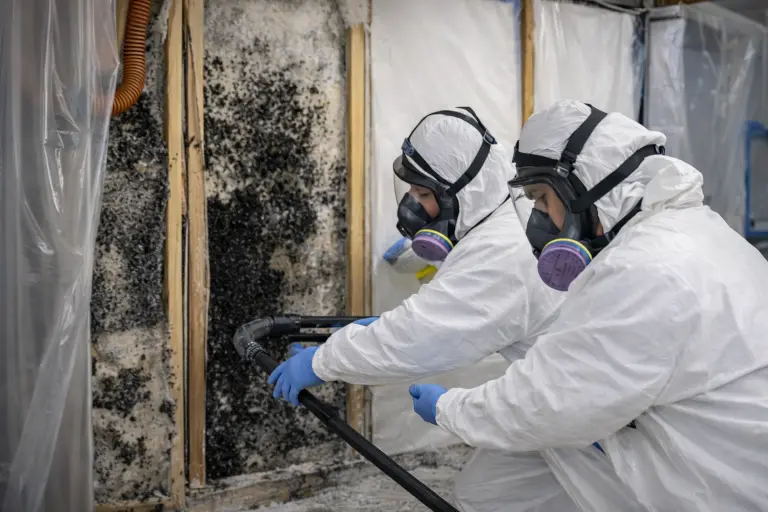
“Black mold” commonly refers to Stachybotrys chartarum, a greenish-black mold species that grows on materials with high cellulose content following serious water damage.
Important clarification: Not all black-colored mold is Stachybotrys. Many mold species appear dark or black including common Cladosporium and Alternaria. Conversely, Stachybotrys doesn’t always appear completely black—it can be dark green, gray, or brownish depending on growth stage and substrate. Laboratory testing provides definitive identification, as visual appearance alone cannot confirm whether dark mold is truly Stachybotrys.
However, the term “black mold” has entered common usage describing toxic mold species requiring special attention—properly so, given the health risks these species create.
Why Black Mold Deserves Special Concern
Stachybotrys chartarum produces mycotoxins—toxic compounds that can cause serious health effects even without direct mold contact or visible growth. These mycotoxins affect protein synthesis, damage rapidly dividing cells, and suppress immune system function.
Health effects from black mold exposure include: Chronic coughing, wheezing, and difficulty breathing. Nose and throat irritation with increased susceptibility to respiratory infections. Suppressed immune function and delayed healing. Headaches, dizziness, difficulty concentrating, and memory problems. Chronic fatigue not relieved by rest. Skin rashes, eye irritation, and digestive issues.
Particularly vulnerable populations: Infants and young children with developing immune and respiratory systems face heightened susceptibility—several cases of serious pulmonary hemorrhage in infants have been linked to heavy Stachybotrys exposure. Elderly individuals, pregnant women, immunocompromised individuals, and those with chronic respiratory conditions like asthma experience severe symptom exacerbation.
For these populations, even limited exposure creates significant risk requiring immediate remediation and temporary relocation during work—similar to protocols we follow for all serious contamination situations.
How Black Mold Grows
Stachybotrys requires specific conditions for establishment and growth, making it an important “water damage indicator species.”
Unlike some mold species tolerating moderate humidity, Stachybotrys demands constant moisture for sustained growth. Materials must remain wet or very damp for extended periods—typically weeks. This explains why its presence confirms serious, prolonged moisture problems requiring comprehensive assessment through professional evaluation. In Fort Myers properties, this often follows hurricane-related roof damage, plumbing failures during heavy summer storms, or extended HVAC condensation issues.
Preferred materials include: Drywall paper, ceiling tiles, cardboard, paper products, wood products, and natural fiber fabrics—all materials with high cellulose content. Stachybotrys rarely grows on non-porous surfaces like metal, glass, or plastic because it needs cellulose nutrition.
Growth appearance: Young colonies appear slimy or wet with dark greenish-black coloration. Mature growth becomes powdery when dried, easily releasing massive spore quantities with slight disturbance. This powdery mature growth creates particular concern during remediation—disturbing colonies releases clouds of mycotoxin-laden spores requiring enhanced containment and personal protection.
Common Locations
We typically find Stachybotrys in drywall behind leaking pipes or fixtures, ceiling tiles below roof leaks, wall cavities with hidden plumbing leaks, areas affected by flooding or storm damage, basements or crawl spaces with chronic moisture, and HVAC systems with persistent condensation—all locations requiring thorough assessment during professional property evaluation.
We frequently encounter these conditions in Fort Myers homes after roof leaks, slab plumbing failures, or storm-related flooding.
Our Black Mold Removal Process
Stachybotrys and other toxic mold species require enhanced remediation protocols beyond standard mold removal to protect both workers and occupants.
Laboratory Testing and Species Identification
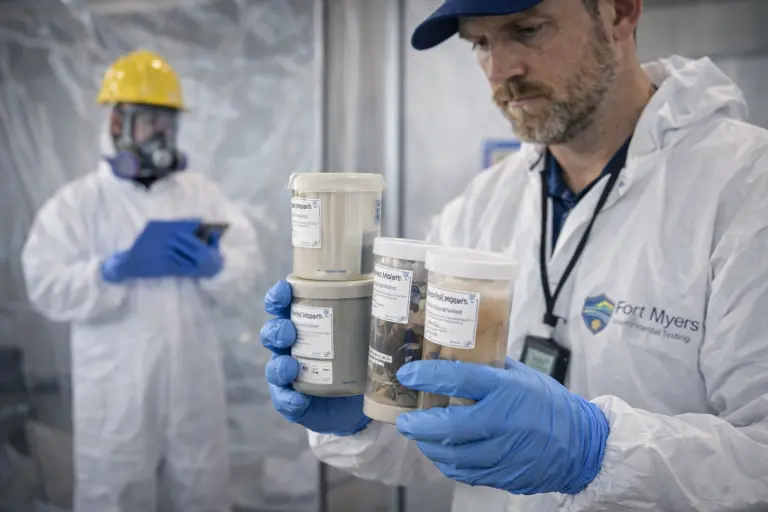
Before beginning removal, we perform laboratory testing when toxic mold is suspected. Testing involves surface samples from suspected growth or air samples if hidden contamination is suspected, analyzed by accredited laboratories using microscopy and culture methods.
Laboratory confirmation identifies specific species requiring enhanced protocols, supports insurance claims requiring documented species identification, and provides baseline data for post-remediation clearance verification.
Other toxic species we handle: While Stachybotrys receives most attention, we also remediate Chaetomium (often grows alongside Stachybotrys on severely water-damaged materials), certain Aspergillus species producing aflatoxins, some Penicillium species producing nephrotoxic compounds, and Fusarium producing trichothecene mycotoxins. Professional remediation protocols for any mycotoxin-producing species follow similar enhanced safety measures.
Enhanced Containment
Strict containment prevents mycotoxin-laden spore spread to clean areas—far more critical than standard remediation containment.
Our containment requirements include: Multiple layers of polyethylene sheeting (6-mil minimum) completely sealing work zones from occupied spaces. Commercial-grade negative air machines with HEPA filtration creating pressure differential preventing spore escape. Minimum 4-6 air changes per hour within containment maintaining negative pressure. Double-chamber airlocks preventing contamination during worker access. Floor-to-ceiling barriers with sealed seams, electrical outlet sealing, and HVAC register protection.
We verify containment effectiveness before removal work begins, measuring pressure differentials and air quality outside containment boundaries to ensure no spore migration occurs during aggressive removal activities.
Personal Protective Equipment
Our workers handling toxic mold wear enhanced protection beyond basic remediation PPE. This includes full-face respirators with P100 filters or powered air-purifying respirators (PAPRs), disposable coveralls with hood and boot covers, full eye protection, and nitrile or neoprene gloves taped to coveralls. Workers exiting containment undergo decontamination procedures removing contaminated PPE before entering clean areas.
Proper PPE protects our team from the thousands of spores disturbed during removal activities, preventing both respiratory exposure and mycotoxin skin contact.
Material Removal Protocol
Contaminated materials receive careful handling minimizing spore release throughout the removal process.
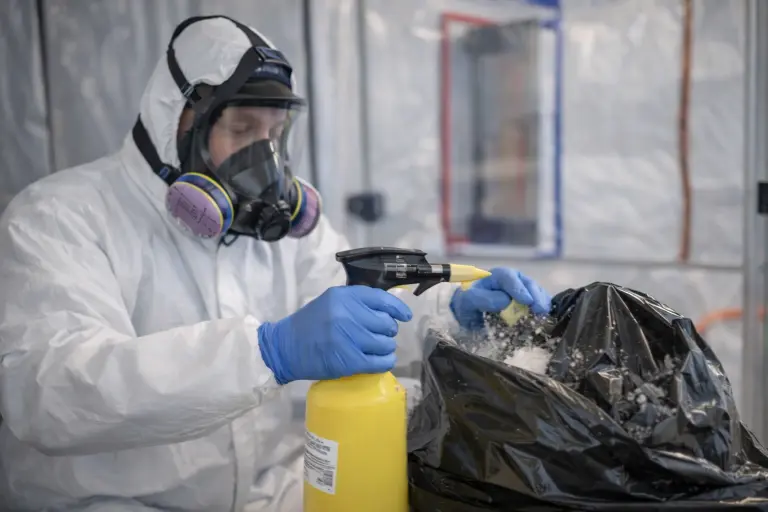
We lightly mist materials before disturbance to reduce airborne spore release, use gentle handling techniques avoiding aggressive scraping or sanding that creates massive spore clouds, place cut materials directly into heavy-duty 6-mil disposal bags within containment, and double-bag with exterior surfaces wiped with antimicrobial solution.
No salvaging attempts: Porous materials with Stachybotrys growth cannot be adequately cleaned—removal and disposal are required. Common removals include drywall with contaminated paper facing, ceiling tiles showing growth, contaminated insulation, carpeting and padding with growth, and water-damaged cardboard or paper products.
HEPA Vacuuming and Antimicrobial Treatment
After material removal, we perform thorough HEPA vacuuming capturing residual spores. All surfaces within containment including walls, floors, ceiling, and structural members receive complete vacuuming using true HEPA filters capturing 99.97% of particles ≥0.3 micrometers. Multiple passes ensure thorough spore removal before antimicrobial application.
EPA-registered fungicides specifically labeled for mycotoxin-producing mold remediation treat remaining surfaces with proven effectiveness against Stachybotrys and related species. Spray application ensures complete coverage with proper dwell time per product specifications.
After cleaning and antimicrobial treatment, we apply encapsulation products that trap remaining contamination, create moisture-resistant barriers preventing future growth, and provide wipeable surfaces easier to maintain. Encapsulation works only after thorough cleaning—it doesn’t remediate contamination by covering it, but provides protective barrier after remediation completion.
Schedule professional black mold inspection and assessment:
Source Moisture Correction
Black mold presence indicates serious moisture problems requiring immediate correction. Stachybotrys doesn’t grow from brief dampness—it requires sustained saturation caused by major plumbing leaks, repeated roof intrusion, foundation moisture issues, HVAC condensation failures, or flooding that wasn’t properly dried. In Fort Myers, these conditions are commonly linked to tropical storms, hurricane-related roof damage, slow-drying building materials, and consistently high year-round humidity.
We identify exact moisture sources through inspection and testing, coordinate repairs of plumbing, roofing, or other building failures, address drainage or grading problems, verify repairs eliminated moisture intrusion, and implement preventive measures. Without moisture correction, Stachybotrys returns rapidly after remediation—often within weeks if conditions remain favorable.
This moisture source correction integrates with our broader property-wide treatment approach, ensuring that black mold removal addresses root causes rather than just visible symptoms.
Post-Remediation Clearance Testing
Black mold removal requires independent verification confirming successful elimination and safe reoccupancy—standards significantly more stringent than typical remediation projects.
Independent Third-Party Testing
We coordinate third-party clearance testing performed by professionals independent from our remediation team, preventing conflicts of interest and ensuring objective assessment. Many insurance policies, commercial leases, and regulatory requirements mandate independent clearance before project completion. Many Fort Myers property owners request independent clearance testing before reoccupying homes or reopening commercial spaces.
Clearance protocol includes: Visual inspection confirming no visible growth and moisture levels in normal range. Air sampling after remediation completion comparing indoor spore levels to outdoor baseline. Surface sampling from previously contaminated areas when appropriate. Moisture meter readings confirming materials dried to normal levels preventing regrowth.
Successful clearance requires: Indoor airborne spore concentrations at or below outdoor levels, absence of Stachybotrys spores in post-remediation samples, similar spore type diversity between indoor and outdoor samples, moisture content in building materials at normal levels, and no visible mold growth or water damage.
Failed clearance requires additional remediation until clearance criteria are achieved—we never consider a black mold project complete until independent testing confirms safe conditions. This protects occupants and provides documentation for insurance, legal proceedings, or real estate transactions.
Health Recovery and Prevention
Removing the contamination source allows health recovery, though timelines vary based on exposure severity and individual sensitivity. Mild symptoms often improve within days to weeks after exposure cessation. Moderate symptoms may require weeks to months for complete resolution. Severe symptoms or prolonged exposure may need medical intervention and extended recovery periods.
We recommend medical evaluation when symptoms persist after remediation, severe respiratory or neurological symptoms are present, immunocompromised individuals were exposed, infants or young children were affected, or significant occupational exposure occurred.
Prevention strategies include immediate water damage response within 24-48 hours, proper building maintenance preventing leaks, adequate ventilation controlling humidity, prompt leak repairs, post-flooding professional drying, and regular inspection of vulnerable areas like bathrooms, basements, attics, and locations around HVAC equipment.
Early detection and rapid moisture correction prevent conditions supporting Stachybotrys growth, protecting both property and occupant health.
How Black Mold Removal Integrates with Complete Services
Black mold removal represents the most serious category within comprehensive remediation services. When laboratory testing identifies Stachybotrys or other mycotoxin-producing species, we elevate our protocols while maintaining coordination with broader property treatment efforts.
Properties rarely have isolated black mold without other contamination issues. The prolonged moisture conditions supporting Stachybotrys typically allow numerous other mold species to establish throughout affected areas. Our approach addresses all contamination comprehensively rather than focusing solely on the toxic species.
Complete assessment matters: When we identify black mold in one location, thorough property inspection often reveals additional contamination requiring remediation. Treating only the visible Stachybotrys while ignoring moisture problems and other species in adjacent areas leads to continued exposure and rapid recontamination.
Our team coordinates black mold removal with complete property assessment, moisture correction, and verification testing ensuring lasting protection rather than temporary symptom treatment.
Investment in Black Mold Removal
Toxic mold remediation costs more than standard mold removal due to enhanced protocols, specialized equipment, and mandatory independent testing. Black mold removal costs in Fort Myers vary depending on the extent of contamination, building layout, and the severity of underlying water damage.
Black mold removal is typically performed as part of a broader mold remediation project addressing moisture sources and related contamination throughout the property. The prolonged moisture conditions that support Stachybotrys growth usually affect multiple areas and building systems requiring comprehensive treatment.
Residential remediation typically ranges: Small contained area (under 10 sq ft) runs $1,500-$3,000. Medium project (10-100 sq ft) costs $3,000-$8,000. Large project (over 100 sq ft) requires $8,000-$25,000+. Whole-house remediation ranges $15,000-$50,000+ depending on extent.
Cost factors include: Contamination extent requiring material removal, containment complexity, enhanced safety protocols and specialized PPE, third-party testing requirements, structural repairs needed, and temporary housing during remediation.
When black mold removal occurs as part of broader water damage response covered by insurance, proper documentation supports claims maximizing coverage potential. Policies vary, but sudden water damage causing mold often receives coverage within policy limits, while gradual leaks or maintenance issues are typically excluded.
Investment value includes: Health protection for vulnerable occupants, property value preservation (disclosed black mold severely reduces marketability), liability protection for property owners and landlords, prevention of progressive structural damage, and peace of mind from verified elimination.
Why Professional Removal Is Essential
Toxic mold removal requires professional expertise and equipment that DIY attempts cannot replicate safely or effectively.
DIY limitations create serious risks: Lack of containment allows massive spore spread throughout properties, inadequate personal protection creates health risks during removal, inability to identify full contamination extent leaves hidden growth, improper disposal may violate environmental regulations, and DIY attempts often void insurance coverage for professional remediation costs.
Critical concern: Disturbing Stachybotrys colonies without proper containment and protection creates exposure magnitudes higher than passive exposure from undisturbed growth. Attempting removal without respirators exposes workers to concentrated mycotoxin-laden spores causing acute symptoms and potential long-term effects.
Black mold situations warrant professional assistance protecting health, property, and legal interests—similar to how serious water damage requires professional restoration rather than DIY approaches.
Choosing Black Mold Removal Professionals
Toxic mold remediation requires specialized training beyond general mold removal certification.
Look for professionals with specialized certification in mold remediation (IICRC, NORMI, or equivalent), specific training for toxic mold handling, proper equipment including negative air machines and HEPA vacuums, EPA-registered antimicrobial products, professional liability and pollution insurance, and documented hazardous waste disposal protocols.
Essential questions: What enhanced protocols do you use specifically for toxic mold? How do you establish and verify containment effectiveness? What testing do you perform before and after remediation? Who performs clearance testing, and are they independent? Can you provide references from similar toxic mold projects?
Warning signs to avoid: Lack of containment procedures, no respiratory protection for workers, unwillingness to discuss detailed safety protocols, no third-party clearance testing offered, and extremely low pricing suggesting inadequate procedures that won’t actually eliminate contamination.
Verify independence between testing and remediation professionals—testing should be performed by separate companies preventing conflicts of interest and ensuring objective assessment.
Schedule Professional Black Mold Assessment in Fort Myers, FL
Don’t risk your health attempting DIY removal of toxic mold species. Professional removal with enhanced safety protocols protects occupants and ensures complete, verified elimination.
We provide comprehensive black mold services including professional inspection and laboratory species identification, enhanced containment setup with verified negative pressure, complete contaminated material removal using strict protocols, HEPA filtration and continuous air scrubbing, antimicrobial treatment and protective encapsulation, moisture source identification and correction coordination, independent third-party clearance testing and verification, and detailed documentation for insurance claims or legal purposes.
Our black mold removal services integrate seamlessly with complete property treatment, ensuring comprehensive protection using the highest safety standards wherever toxic species are identified.
Call now to schedule black mold removal services for your Fort Myers home or commercial property: 📞 (239) 518-4848
Safe, complete black mold elimination starts with professional expertise, proper equipment, and verified results.
Available 24/7 for emergency situations throughout Southwest Florida.