Mold Inspection in Fort Myers, FL
Professional Mold Inspection Services for Homes & Businesses
Discover what’s hiding behind your walls, in your attic, and throughout your property with thorough professional mold inspection services designed to identify problems before they escalate.
Our certified inspectors provide detailed mold inspection in Fort Myers, FL, helping homeowners and business owners identify hidden moisture, structural dampness, and contamination before costly damage develops in Southwest Florida’s humid climate.
What Is Professional Mold Inspection?
Professional mold inspection is a systematic evaluation of your property conducted by trained specialists using advanced diagnostic equipment to identify visible mold growth, hidden moisture problems, and conditions supporting mold colonization.
Unlike a basic visual check you might do yourself, professional inspection combines specialized training, calibrated equipment, and methodical assessment protocols to find problems invisible to untrained eyes.
Inspection reveals:
Active mold growth on surfaces and within building assemblies, hidden moisture intrusion behind walls and inside structural cavities, water damage from current or past leaks, elevated humidity levels supporting mold establishment, HVAC system contamination spreading spores throughout properties, and conditions likely to cause future mold problems without intervention.
This comprehensive evaluation provides the foundation for effective remediation strategies and helps property owners make informed decisions about necessary repairs.
Why Professional Inspection Matters
Many property owners discover mold problems only after extensive damage has occurred. Visible surface mold often represents just a fraction of total contamination—the real damage typically hides within wall cavities, beneath flooring, inside ductwork, or in attic spaces.
Professional Inspection Catches Problems Early
In Fort Myers’ high-humidity climate, mold growth can begin within 24–72 hours after water intrusion, especially following summer storms or HVAC condensation issues common throughout Lee County. Early detection through professional inspection prevents minor moisture issues from escalating into expensive structural repairs requiring wall removal, insulation replacement, and extensive remediation.
DIY Inspection Limitations
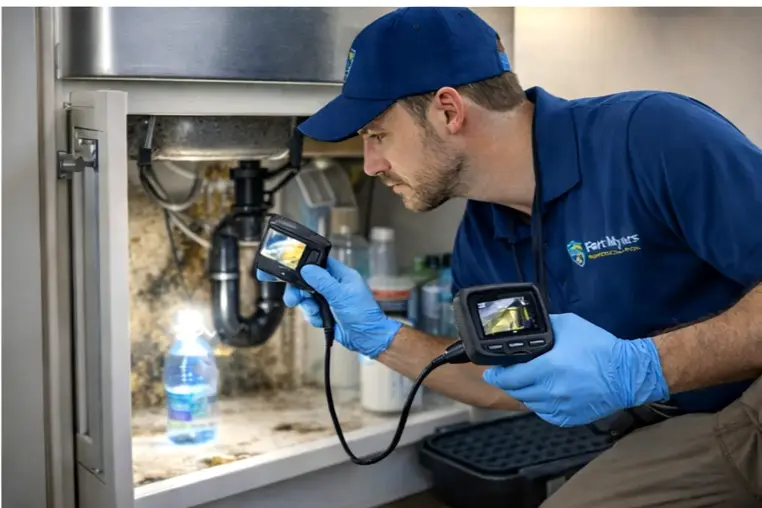
Without proper training and equipment, homeowners miss critical warning signs. Moisture meters detect dampness inside materials that feel dry to the touch. Thermal imaging cameras reveal temperature differentials indicating hidden water intrusion. Borescopes allow inspection inside wall cavities without destructive investigation.
Professional inspectors know where mold hides based on building construction, climate patterns, and common failure points specific to different property types and ages.
When Inspection Is Essential
Before purchasing property (pre-purchase inspection protects buyers from costly surprises). This is especially important for buyers purchasing homes in Fort Myers neighborhoods like Gateway, McGregor, Cypress Lake, or North Fort Myers, where storm-related moisture issues are common.
Inspection is also essential after water damage events (even after visible drying, hidden moisture often remains), when musty odors persist without visible mold, when occupants experience unexplained health symptoms improving away from the property, before listing property for sale (proactive sellers avoid last-minute negotiation problems), and when previous remediation may have been incomplete.
Insurance claims, real estate transactions, and tenant disputes all benefit from documented professional inspection providing objective third-party assessment of property conditions.
Comprehensive Inspection Process
Initial Consultation & Property History
Inspection begins with detailed discussion about your concerns, property history, and any previous water damage or remediation efforts. Inspectors need to understand:
When symptoms first appeared, what you’ve observed (odors, visible growth, health effects), previous water intrusion events (roof leaks, plumbing failures, flooding), past remediation attempts and their outcomes, and current HVAC system age and maintenance history.
This background information guides inspection focus toward likely problem areas and helps identify patterns suggesting specific moisture sources.
Visual Inspection & Documentation
Systematic visual examination covers all accessible areas including living spaces, bathrooms, kitchens, basements or crawl spaces (where present), attics and roof structures, mechanical rooms and utility areas, HVAC systems and ductwork, exterior building envelope (roof, siding, foundations), and areas surrounding plumbing penetrations.
Inspectors look for visible mold growth, water staining and discoloration, efflorescence (mineral deposits indicating moisture), deteriorating building materials, condensation patterns, ventilation deficiencies, and any conditions promoting mold establishment.
High-resolution photography documents findings, creating visual records supporting inspection reports and insurance claims.
Moisture Mapping & Detection
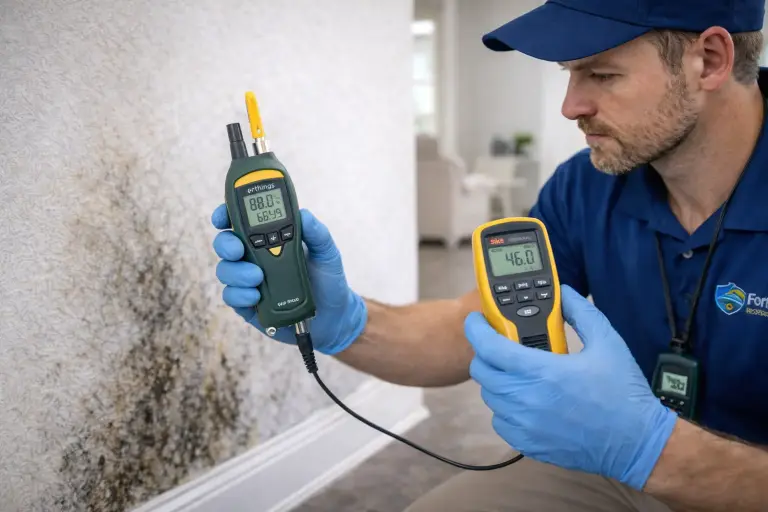
Moisture meters measure moisture content within building materials. Pin-type meters use electrode probes penetrating material surfaces, while pinless meters use electromagnetic signals scanning without surface damage.
Readings reveal:
Current moisture levels in walls, ceilings, and floors, wet materials that appear dry visually, moisture migration patterns from leak sources, and areas requiring monitoring or immediate attention.
Normal moisture content for wood framing ranges from 6-12%. Readings above 16% indicate conditions supporting mold growth. Readings above 20% suggest active water intrusion requiring immediate investigation.
Moisture mapping creates documented patterns showing contamination extent and moisture source locations, guiding targeted remediation planning.
If visual signs or moisture readings raise concerns, professional mold testing can confirm the presence and type of mold through laboratory analysis.
Thermal Imaging Assessment
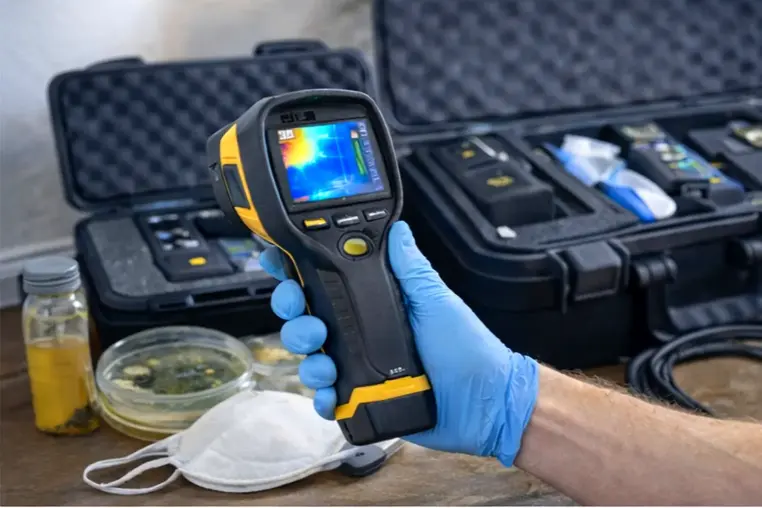
Infrared thermal imaging cameras detect temperature variations across building surfaces invisible to standard visual inspection. These temperature differentials reveal:
Hidden water intrusion behind walls (wet materials appear cooler), insulation deficiencies allowing condensation, air leakage paths introducing moisture, roof leaks before interior damage appears, and HVAC problems causing condensation issues.
Thermal imaging proves especially valuable for:
Flat or low-slope roofs where leaks travel before appearing inside, multi-story buildings where water migrates between floors, properties with finished basements concealing foundation moisture, and commercial buildings with complex mechanical systems.
Non-invasive thermal scanning identifies problems without destructive investigation, saving property owners from unnecessary exploratory demolition.
HVAC System Evaluation
Heating, ventilation, and air conditioning systems frequently harbor mold contamination that distributes spores throughout entire properties every time the system operates. In Fort Myers homes and commercial buildings, year-round air conditioning use creates condensation inside air handlers and duct systems, making HVAC components a common source of concealed mold growth.
Inspection includes:
Visual examination of accessible ductwork, air handler and blower assembly assessment, evaporator coil inspection for biological growth, condensate drain line evaluation, filter condition and contamination check, and supply/return vent examination.
Microbial growth within HVAC systems creates particular concern because contaminated systems continuously spread spores to every room, defeating remediation efforts in other areas unless system contamination is addressed simultaneously.
Attic & Roof Structure Assessment
Attics represent one of the most common mold growth locations due to:
Roof leaks from storm damage or aging materials, inadequate ventilation trapping heat and moisture, insulation blocking proper airflow, HVAC equipment condensation, and bathroom/kitchen exhaust venting into attic spaces rather than outside.
Attic inspection examines:
Roof decking for water staining or active leaks, rafter and truss surfaces for mold growth, insulation for moisture saturation or compression, ventilation adequacy (soffit, ridge, gable vents), bathroom/kitchen exhaust termination points, and HVAC equipment installation and condensate management.
Proper attic ventilation requires balanced intake (soffit vents) and exhaust (ridge or gable vents) creating continuous airflow preventing heat and moisture accumulation.
Crawl Space Investigation
Properties with crawl spaces (less common in many regions but present in some construction types) face unique moisture challenges from:
Ground moisture vapor rising through dirt floors, inadequate vapor barriers, foundation wall condensation, plumbing leaks in underfloor systems, and insufficient ventilation.
Crawl space assessment includes:
Foundation wall examination for moisture intrusion, floor joist and subfloor inspection for mold growth, vapor barrier condition evaluation, standing water or drainage issues, insulation condition assessment, and ventilation adequacy determination.
Crawl space moisture problems affect entire structures as humid air rises into living spaces through gaps and penetrations in floor assemblies.
Advanced Inspection Technologies
Borescope Investigation
Borescopes (inspection cameras) allow visual examination inside wall cavities, above ceilings, within ductwork, and other concealed spaces without destructive access.
Small holes (typically ¼ inch) allow insertion of fiber-optic or digital camera probes, providing direct visual confirmation of:
Mold growth on cavity surfaces, water staining on hidden structural members, insulation condition and saturation, and pest activity or structural damage.
Borescope investigation answers critical questions: Does visible exterior mold penetrate through walls? Has ceiling staining caused hidden structural damage? Is insulation saturated requiring replacement?
Minimally invasive inspection preserves property finishes while providing definitive answers about hidden conditions.
Hygrometer & Psychrometer Assessment
Hygrometers measure relative humidity—the amount of moisture in air relative to maximum capacity at current temperature. Relative humidity above 60% supports mold growth on susceptible materials.
Psychrometers measure both temperature and humidity, calculating:
Dew point (temperature where condensation forms), vapor pressure (driving force for moisture migration), and specific humidity (actual moisture content regardless of temperature).
These measurements identify:
Areas where condensation will occur during temperature fluctuations, spaces with inadequate climate control, and seasonal moisture pattern variations.
Understanding psychrometric conditions helps predict where mold problems will develop and guides preventive strategies.
Air Pressure & Ventilation Testing
Building pressure relationships affect moisture migration and indoor air quality. Negative pressure (indoor pressure lower than outdoor) pulls humid outdoor air inside through gaps and cracks. Positive pressure pushes conditioned air outward.
Pressure testing reveals:
Mechanical system imbalances causing pressure problems, inadequate return air pathways creating negative pressure, exhaust fan effectiveness in bathrooms and kitchens, and whole-building air exchange rates affecting moisture control.
Proper pressure balance prevents moisture infiltration and ensures effective ventilation removing humidity generated by cooking, bathing, and occupant activities.
Inspection Report & Documentation
Professional inspection concludes with comprehensive written report detailing:
Findings summary: Overview of identified problems, moisture sources, and mold locations.
Photographic documentation: High-resolution images showing visible mold, water damage, moisture readings, and thermal imaging results.
Moisture mapping diagrams: Visual representation of affected areas with moisture meter readings noted.
Detailed observations: Room-by-room description of conditions, material moisture content, and specific concerns.
Recommendations: Prioritized action items addressing immediate problems, necessary repairs, and preventive measures.
Scope of work guidance: Information supporting remediation planning and contractor bid comparison.
Laboratory testing results: When sampling was performed, accredited lab reports identifying mold species and concentration levels.
Reports Serve Multiple Purposes
Insurance claim documentation supporting coverage decisions, real estate disclosure providing buyers with property condition information, remediation planning guiding effective treatment strategies, legal protection demonstrating due diligence for property owners, and baseline documentation for monitoring ongoing situations.
Professional reports follow industry standards and provide objective third-party assessment independent of remediation contractors, preventing conflicts of interest.
In cases where mold growth is extensive, professional mold removal may be necessary to restore affected areas safely.
Need a professional mold inspection Fort Myers?
Schedule a comprehensive property assessment with local specialists familiar with Southwest Florida construction and climate conditions.
Pre-Purchase Property Inspection
In Fort Myers’ competitive real estate market, undiscovered mold problems can delay closings and create major financial setbacks for buyers and sellers alike.
Pre-Purchase Inspection Protects Buyers By
Revealing hidden problems before financial commitment, providing negotiation leverage for price reduction or seller remediation, preventing post-purchase legal disputes over non-disclosure, and allowing informed decisions about property condition and needed repairs.
When to Schedule Pre-Purchase Inspection
During option period (inspection contingency window), after initial walkthrough reveals concerning signs, when property history includes flooding or water damage, for older properties with aging building systems, and before waiving inspection contingencies in competitive markets.
Smart buyers invest in professional inspection before removing contingencies or negotiating final terms. The modest inspection cost provides protection against expensive surprises and potential health hazards.
What Inspection Reveals for Buyers
Active mold requiring immediate remediation, evidence of past problems and remediation quality, moisture sources needing repair before closing, HVAC system condition and contamination, and long-term maintenance needs affecting ownership costs.
Armed with inspection findings, buyers negotiate seller-funded remediation, price reductions reflecting needed repairs, or informed decisions to walk away from problematic properties
Post-Remediation Inspection
After mold remediation, independent inspection verifies work quality and confirms successful completion.
Post-Remediation Inspection Includes
Visual verification that all contaminated materials were removed, moisture source correction confirmation, surface cleaning thoroughness assessment, antimicrobial treatment application verification, and containment effectiveness evaluation.
Independent third-party inspection (performed by inspectors not affiliated with remediation contractors) prevents conflicts of interest and ensures objective quality assessment.
Why Post-Remediation Inspection Matters
Incomplete remediation leads to rapid mold return, unaddressed moisture sources guarantee future problems, hidden contamination may have been missed during remediation, and insurance requires verification before claim closure.
Clearance inspection protects property owners from paying for incomplete work and provides documented evidence that properties are safe for reoccupation.
Inspection for Insurance & Legal Purposes
Insurance claims, tenant disputes, and real estate litigation often require professional inspection documentation.
Insurance Claim Support
Documented evidence of mold extent and cause, moisture source identification supporting coverage determination, photographic proof of damage severity, professional opinions about remediation necessity, and detailed scope of work for contractor bidding.
Insurance adjusters rely on third-party professional inspection when evaluating coverage and claim amounts.
Legal Dispute Documentation
Tenant claims about health effects or property conditions, landlord defense against negligence allegations, real estate disclosure verification, contractor work quality disputes, and property damage liability determination.
Professional inspection provides objective evidence supporting legal positions and often prevents prolonged disputes by establishing factual property conditions.
Inspection Costs & Value
Professional Fort Myers mold inspections commonly range from $250 to $600 for residential properties, depending on property size, accessibility, and the scope of moisture assessment required.
Standard Inspection Includes
Visual examination of all accessible areas, moisture meter readings, thermal imaging assessment, HVAC system evaluation, photographic documentation, and comprehensive written report.
Additional Services Affecting Cost
Laboratory testing, when recommended, typically adds $150 to $400 per sample location depending on the type of sample collected and laboratory used. Additional factors affecting cost include air quality sampling, extensive properties requiring extended inspection time, commercial buildings with complex systems, and borescope investigation of concealed spaces.
Investment Value
Early problem detection saves thousands in avoided structural damage, insurance claim documentation supports coverage decisions, real estate transaction protection prevents costly post-purchase surprises, remediation planning reduces unnecessary contractor work, and peace of mind from knowing true property condition.
Skipping inspection to save a few hundred dollars often results in thousands in unexpected expenses when hidden problems are discovered later.
Choosing Qualified Inspectors
Professional mold inspection requires specialized training, experience, and proper equipment.
Qualifications to Verify
Relevant certification or licensing (requirements vary by state), specialized training in building science and mold assessment, professional liability insurance coverage, calibrated diagnostic equipment (moisture meters, thermal cameras), and independence from remediation contractors (avoiding conflicts of interest).
Inspection services are delivered by carefully vetted, qualified professionals within our service network, supporting residential and commercial properties throughout Fort Myers and surrounding Lee County communities.
Questions to Ask Prospective Inspectors
What does your inspection include? What equipment do you use? How long have you performed mold inspections? Can you provide sample reports? Are you affiliated with remediation contractors? How soon will I receive the inspection report?
Beware of “free” inspections offered by remediation contractors—these create conflicts of interest where contractors benefit from finding (or exaggerating) problems.
Independent inspectors provide objective assessment without financial incentive to recommend unnecessary remediation.
Maintaining Property After Inspection
Professional inspection identifies current problems and provides guidance for preventing future issues.
Follow Inspection Recommendations
Address identified moisture sources promptly, maintain proper ventilation in bathrooms and kitchens, monitor previously affected areas for moisture return, service HVAC systems regularly including filter changes, repair roof or plumbing leaks immediately when discovered, and maintain indoor humidity below 60% year-round.
Periodic Re-Inspection
Properties with previous mold problems benefit from follow-up inspection verifying moisture sources remain corrected and confirming mold hasn’t returned.
Annual or biennial inspection provides peace of mind and catches new problems before significant damage develops.
Schedule Your Professional Inspection in Fort Myers, FL
Don’t wait until small moisture problems become expensive mold disasters. Professional inspection identifies issues early, guides effective solutions, and protects your most valuable asset.
Call now to schedule inspection services for your Fort Myers home or commercial property:
Comprehensive property assessment with advanced diagnostic equipment, detailed written reports with photographic documentation, pre-purchase inspection protecting real estate transactions, post-remediation verification ensuring quality work, insurance and legal documentation support, and expert recommendations for moisture control and mold prevention.