Mold Testing in Fort Myers, FL
Professional Mold Testing & Laboratory Analysis
Find out what type of mold is in your home and how bad the problem really is. Our accredited lab testing gives you accurate answers so you can protect your family’s health.
Our certified professionals provide detailed mold testing in Fort Myers, FL, helping homeowners, property managers, and business owners understand the exact contamination levels inside their Southwest Florida properties.
What Is Professional Mold Testing?
Professional mold testing uses scientific methods and laboratory analysis to identify the exact mold species in your property, measure how many spores are in the air, and figure out how serious the contamination is.
A visual inspection shows you where mold is growing. But testing answers the questions you can’t see:
What exact type of mold is this? Is it toxic black mold or something less dangerous? How bad is the contamination? Are there way more spores in your indoor air than normal? Did the cleanup work actually fix the problem?
Testing gives you real scientific data. This helps with health decisions, planning the cleanup, filing insurance claims, real estate deals, and making sure the remediation worked.
- AIHA & EMLAP accredited laboratory analysis
- Certified environmental sampling professionals
- Legally defensible reports for insurance and real estate
Professional Mold Testing Includes:
- Air, surface, bulk, and dust sampling
- Accredited laboratory analysis
- Clear, easy-to-understand reports
- Pre- and post-remediation verification
Why Mold Testing Matters
Here’s the thing – not all mold is equally dangerous. Some types mainly cause allergies. Others produce toxins that create serious health problems even in small amounts. In Fort Myers’ humid climate, mold can develop rapidly after plumbing leaks, roof damage, or storm-related water intrusion, making laboratory testing especially important for identifying hidden contamination.
Testing Tells You What You’re Really Dealing With
- Black mold (Stachybotrys chartarum) makes toxins that affect your nervous system.
- Aspergillus can cause severe lung infections in people with weak immune systems.
- Penicillium causes allergies, and some types damage your kidneys.
- Chaetomium shows up after serious water damage and also makes toxins.
Without lab testing, you’re guessing about the health risks. You also won’t know what safety measures to take during cleanup.
Testing Shows You How to Handle the Cleanup
Widespread contamination with toxic mold needs serious containment, special disposal methods, and stricter safety rules compared to a small patch of regular mold.
Test results tell you:
Do you need containment barriers? What kind of protective gear does the cleanup crew need? Can materials be cleaned or do they need to go in the dumpster? What standards must be met before people can move back in?
Testing Backs Up Important Decisions
Insurance companies care about what caused the mold and how extensive it is. Real estate deals require you to disclose problems. Tenants with health concerns need proof. And you need to verify the cleanup actually worked.
Schedule Your Mold Test Today
Get real answers about what’s in your property.
Why Choose Our Testing Services
Professional Mold Testing & Analysis We provide comprehensive mold testing services using certified environmental sampling professionals and accredited laboratory analysis. Our testing accurately identifies mold species, measures contamination levels, and provides the data needed for effective remediation planning.
We Use Certified Labs: Every sample goes to labs with AIHA and EMLAP accreditation. These certifications mean the results are accurate and hold up legally if you need them to.
Our Team Knows What They’re Doing: Certified environmental specialists with the right training and professional equipment. Not just anyone with a moisture meter.
Reports That Make Sense: You’ll get detailed lab results, but we explain them in plain English. No confusion about what the numbers mean or what you should do next.
Quick Results: Most tests come back in 24-48 hours for basic analysis. Culture tests take 5-10 days. Either way, you’re not waiting weeks for answers.
Start to Finish Coverage: We test before cleanup starts, during the work if needed, and after to make sure everything’s actually fixed. When required, independent third-party clearance testing can also be arranged for additional verification.
Types of Mold Testing
Air Sampling
Air testing catches the mold spores floating around that you can’t see. This tells you what’s actually in the air you’re breathing. In many Fort Myers homes, elevated indoor spore levels are often linked to hidden moisture inside walls, attics, or HVAC systems running year-round.
We pull air through special collection devices that trap the spores. Then the lab counts them and figures out what species they are.
The lab tells us:
How many spores per cubic meter of air. What types of mold are present. What percentage is each type. How your indoor levels compare to outside.
Common testing methods:
Air-O-Cell sampling: The most popular method. Catches mold spores and other particles for complete analysis.
Allergenco sampling: Similar to Air-O-Cell. Counts spores and identifies species.
Culture plates: Collects living spores on growth media. The lab grows them to identify exact species. But this only catches mold that can grow in lab conditions.
When you need air testing:
You suspect hidden mold but can’t see it. Someone’s having health problems. You need to verify cleanup worked. You want to check if your HVAC system is spreading mold. You want to compare different rooms.
Where we sample matters:
We take samples from affected areas, clean areas for comparison, outside for a baseline, and near air returns to check if your system is spreading spores.
One sample doesn’t tell the whole story. Multiple locations give you the complete picture.
Surface Sampling
Surface testing takes mold directly from materials. This confirms what’s growing on specific surfaces.
Tape lift sampling uses clear tape pressed against suspected mold. Then we look at it under a microscope. This method tells us if that discoloration is actually mold, what type it is, how dense the growth is, and gives us visual proof.
Tape works great on smooth surfaces like drywall and painted walls. Not so much on rough or dusty surfaces.
Swab sampling uses sterile swabs rubbed across areas to collect mold for lab testing.
Swabs work well on rough surfaces, HVAC parts like coils and ducts, spots where tape won’t stick, and when we’re checking for bacteria too.
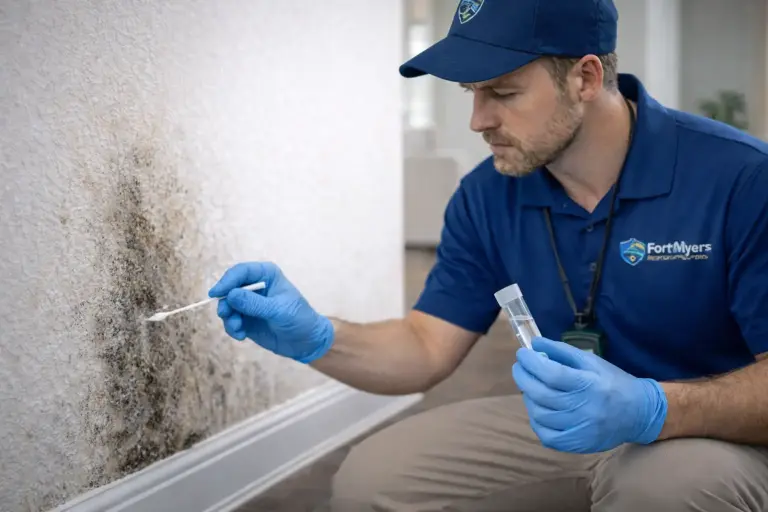
Bulk sampling means cutting out small pieces of material that might have mold growing inside – things like drywall, insulation, or wood.
The lab figures out how deep the mold goes, whether you can save the material or need to trash it, and exactly what species it is.
Bulk samples prove that mold is inside building materials, not just on the surface. This helps decide if you need removal or just cleaning.
Dust Sampling
Dust testing analyzes settled dust from floors, surfaces, or your HVAC filter. This reveals stuff you might not see otherwise.
It shows contamination patterns over time, what types of spores your HVAC has been circulating, and overall building contamination even when you don’t see active growth.
ERMI testing is a specialized dust test that checks for 36 different mold species using DNA analysis. It creates a moldiness score.
ERMI helps when: You think there’s hidden contamination somewhere. Someone has symptoms but you can’t find the source. You want to verify that cleanup removed all the spore reservoirs.

When You Should Get Testing
You definitely need testing when:
There’s visible mold and you need to know what it is. People are having health problems. You suspect hidden mold. You need to verify cleanup worked. Insurance or legal issues require documentation. You’re buying or selling property. In Fort Myers’ active real estate market, documented mold testing results provide protection for both buyers and sellers during negotiations.
You might not need testing when:
There’s obvious water damage that needs fixing regardless. It’s a small spot of surface mold on something non-porous that you can clean. The moisture source is clear and easy to fix. You need to act now and can’t wait for lab results.
In emergencies, cleanup often starts based on what we can see. Testing comes after to verify it worked.
How We Test: The Process
Good testing isn’t random. There’s a strategy based on your specific situation.
Before Cleanup Starts
Pre-remediation testing establishes where you’re starting from. This includes baseline contamination levels, what specific species need special handling, how the air quality is affected throughout your property, and hidden contamination you can’t see.
We recommend sampling:
Air from obviously affected areas. Air from rooms that look clean. Outside air for comparison. Surface samples from suspected growth. HVAC samples if we think the system is contaminated.
This data guides decisions about containment, worker safety, and what standards need to be met for clearance.
During the Cleanup
Mid-remediation testing checks if the work is being done right.
We verify that containment is working and spores aren’t escaping. We check spore levels in the work zone versus clean areas. We make sure procedures are preventing spread to other areas.
We compare spore levels inside containment to adjacent spaces. This confirms the barriers and negative air pressure are actually keeping spores contained.
If we find elevated spores outside containment, something’s wrong. Work stops until it’s fixed.
After Cleanup Is Done
Post-remediation clearance testing proves the job is finished. Many Fort Myers property owners request independent clearance testing to ensure remediation work meets professional standards before reoccupying the space.
We confirm the mold is gone, spore levels are back to normal, moisture sources are fixed, and the property is safe.
Clearance criteria:
Indoor spore counts at or below outdoor levels. Those problem species from before are gone. No visible growth or water damage. Moisture readings are normal for building materials.
For clearance we sample:
Air from cleaned areas. Air from areas that weren’t treated (for comparison). Outside air as control. Visual check to confirm work completion.
If testing fails, more work happens until it passes.
Many insurance policies, commercial leases, and government contracts require independent clearance testing before calling the job done.
What Testing Costs
In many mold removal projects, only limited testing is required. Comprehensive testing packages are typically recommended for health concerns, insurance documentation, real estate transactions, or post-remediation clearance. Costs vary based on what kind of sampling and how much:
- Air sampling: $200-$400 per location
- Surface sampling: $150-$300 per sample
- Bulk sampling: $150-$300 per sample
- ERMI testing: $300-$400 per sample
- Full testing (multiple types): $800-$1,500
Why it’s worth it:
You know the actual health risks so you can make smart decisions. You have documentation for insurance claims. You get guidance for cleanup so you don’t waste money. You verify the work was done right. You have legal protection if disputes come up.
Testing costs money upfront. But it prevents expensive mistakes from incomplete work, doing too much, or not taking proper safety measures.
Lab Analysis Methods
How Laboratories Analyze Mold Samples (Click to Expand)
Microscopic Analysis
Microscopic analysis identifies mold by examining spores under high-powered microscopes (typically 400–1000x magnification). Analysts assess spore size, shape, color, and structural characteristics to identify mold genera such as Aspergillus, Penicillium, Cladosporium, and Stachybotrys.
This method provides fast results—usually within 24 to 48 hours—and detects both live and non-viable spores. While microscopy reliably identifies mold to the genus level, exact species identification often requires culture-based testing.
Advantages: Fast turnaround, detects live and dead spores, lower cost.
Limitations: May not identify species level, cannot confirm mold viability.
Culture-Based Analysis
Culture-based analysis places collected samples onto laboratory growth media under controlled temperature and humidity conditions. Viable mold spores grow into colonies that can be precisely identified.
Samples are incubated for approximately 3–7 days. Developed colonies are examined microscopically and, when needed, confirmed using biochemical testing.
Advantages: Species-level identification, confirms viable mold, supports toxicity testing.
Limitations: Longer turnaround time (5–10 days), higher cost, detects only mold capable of laboratory growth.
DNA-Based Testing (PCR / qPCR)
DNA-based testing uses polymerase chain reaction (PCR) and quantitative PCR (qPCR) technology to identify mold DNA with extremely high sensitivity.
MSQPCR (Mold-Specific Quantitative PCR) targets specific mold species of concern and provides precise quantification, including toxigenic molds such as Stachybotrys, even at very low concentrations.
Advantages: Species-level accuracy, rapid results, detects mold from degraded or non-viable samples.
Limitations: Higher cost compared to traditional microscopy and culture methods.
For a complete assessment, laboratories often combine microscopic analysis for a rapid overview with culture or DNA-based testing for precise species identification.
Lab Certification Matters
Testing needs to be done by accredited labs following real standards.
Testing needs to be done by accredited labs following real standards.
AIHA accreditation (American Industrial Hygiene Association) means the lab meets strict requirements for analyst training, quality control, regular proficiency testing, equipment maintenance, and following proper procedures.
EMLAP certification (Environmental Microbiology Laboratory Accreditation Program) specifically covers environmental microbiology testing.
Why This Matters
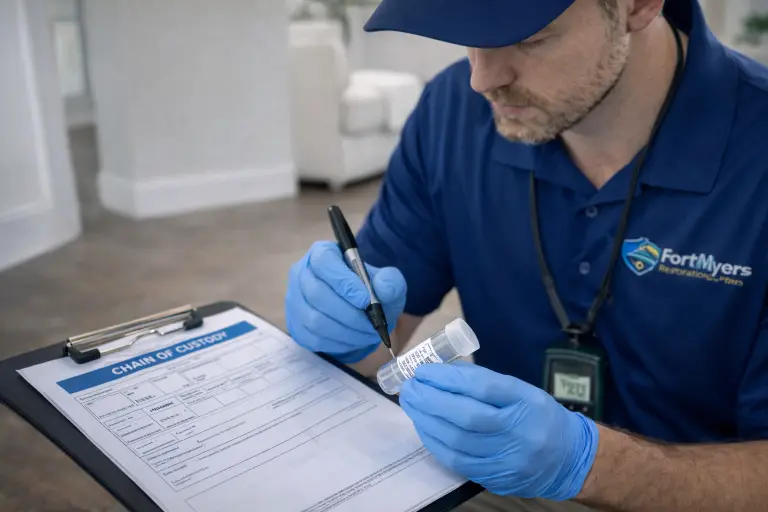
Accreditation ensures accurate results using validated methods. It provides legally defensible documentation. It maintains chain of custody for samples. It follows recognized professional standards.
Always check that the lab analyzing your samples has current accreditation.
Understanding Your Test Results
Understanding Your Mold Test Results (Click to Expand)
Laboratory reports contain detailed data that can be confusing without proper context. Below is a clear explanation of what your mold test results mean and how they should be interpreted.
Spore Count Analysis
Air sample results report mold concentrations as spores per cubic meter of air (spores/m³).
Typical outdoor levels: Generally range between 50–500 spores/m³, depending on season, weather conditions, and geographic location.
How to interpret the numbers:
- Indoor levels similar to outdoor levels: Usually considered normal
- Indoor levels 2–10× higher than outdoor levels: Possible indoor mold issue requiring investigation
- Indoor levels more than 10× outdoor levels: Significant contamination requiring remediation
- Any presence of water-damage indicator molds (Stachybotrys, Chaetomium, Fusarium): Cause for concern
Important considerations:
- A single elevated reading may represent a temporary spike
- Multiple samples from different locations provide more accurate assessment
- Outdoor spore levels vary seasonally and affect comparisons
- Mold species diversity is as important as total spore count
Mold Species Identification
Laboratory reports identify molds to the genus or species level and show the relative percentage of each mold type present.
Common indoor molds include:
- Cladosporium: Common outdoor mold that may also appear indoors; generally allergenic
- Penicillium: Found on water-damaged materials; causes allergies and may produce toxins
- Aspergillus: Large group including allergenic and toxigenic species; some pose infection risk
- Alternaria: Common allergen; often linked to outdoor sources or condensation issues
- Stachybotrys (black mold): Water-damage indicator producing mycotoxins
- Chaetomium: Severe water-damage indicator; often found with black mold
- Fusarium: Water-damage indicator mold producing mycotoxins
The presence of any water-damage indicator species suggests active or recent moisture problems that require immediate investigation and correction.
Comparing Test Results
Accurate interpretation requires comparison of multiple data points rather than reviewing a single result in isolation.
- Indoor vs. outdoor: Indoor levels should be equal to or lower than outdoor levels
- Affected vs. unaffected areas: Contaminated spaces typically show higher concentrations
- Before vs. after remediation: Successful cleanup significantly reduces spores and removes water-damage species
Some reports include mold diversity analysis. High diversity usually indicates outdoor sources, while low diversity dominated by one or two species suggests indoor mold amplification.
Health Risks
Health Risks Associated With Mold Exposure (Click to Expand)
Mold test results help evaluate potential health risks, but proper interpretation requires professional expertise and consideration of individual health factors.
Allergenic Molds
Allergenic molds such as Cladosporium, Alternaria, and common Penicillium species primarily cause allergic reactions.
Symptoms may include nasal congestion, sneezing, coughing, throat irritation, itchy eyes, and worsening asthma in sensitive individuals.
Toxic (Mycotoxin-Producing) Molds
Some molds produce mycotoxins that can pose more serious health concerns, especially with prolonged or repeated exposure.
These include Stachybotrys, certain Aspergillus and Penicillium species, Chaetomium, and Fusarium.
Reported effects may include chronic coughing, difficulty breathing, headaches, dizziness, trouble concentrating, fatigue, immune system suppression, and in severe cases, organ damage.
Pathogenic Molds
Pathogenic molds, including certain Aspergillus species, can cause infections in individuals with weakened immune systems.
These infections may be serious or life-threatening without appropriate medical treatment.
Individual Sensitivity
Reactions to mold exposure vary widely. Some individuals tolerate moderate exposure without noticeable symptoms, while others may experience reactions at very low levels.
Important Health Considerations
Mold testing provides objective environmental data but does not replace medical diagnosis. Health-related decisions should always involve qualified medical professionals familiar with mold-related conditions.
Extra caution is recommended for vulnerable populations, including children, elderly individuals, pregnant women, people with asthma, and those with compromised immune systems.
What Makes Quality Mold Testing
Professional mold testing requires proper training, the right equipment, and good lab connections.
Look for:
Certification in environmental sampling. Calibrated professional air sampling equipment. Relationships with accredited labs. Professional liability insurance. Experience with comprehensive mold assessment projects.
Questions to ask:
What sampling methods do you recommend for my situation? Which lab will analyze the samples? How long until I get results? What’s this going to cost? How will testing results guide the next steps? Professional mold testing provides the accurate data needed to make informed decisions about remediation, whether you choose to work with us or another qualified remediation company.
Lab Reports Explained
Professional lab reports include sample ID and collection details, what analysis methods were used, chain of custody documentation, spore counts and IDs, comparison to outdoor controls, and interpretation notes.
Good labs provide:
Clear data presentation. Review by professional mycologist. Comparison to relevant standards. Availability to answer your questions. If results seem confusing or contradictory, ask for a lab consultation. Reputable labs have experienced mycologists who can explain findings and answer questions.
When laboratory results indicate a mold problem, the next step is often professional mold removal to fully address the source and restore healthy indoor air quality.
Schedule Your Mold Testing in Fort Myers, FL
Get accurate information to make smart decisions. Professional testing provides scientific data that protects health, guides cleanup planning, and verifies property safety.
Call now for professional mold testing services for your Fort Myers home or commercial property:
Air quality sampling and analysis. Surface and bulk sample collection. Accredited lab analysis. Clear result interpretation. Pre-remediation assessment. Post-remediation clearance verification. Insurance documentation support.
Get accurate answers about your property’s mold situation.